Bank of China lets a foreign card take RMB¥3,000 per withdrawal. China Construction Bank lets it take RMB¥1,000, and only twice a day. Both figures come from the banks' own service pages, and neither appears on the machine before you commit to a transaction.
a chinese atm will hand a local cardholder RMB¥20,000 a day without a conversation, and it will hand a foreign cardholder a third of that per press, which matters only if you needed more than a third. the machine also cannot tell that your bank at home treats china as a fraud corridor, that your card is a pure chip card the largest branch network in the country cannot read, or that your pin is four digits in a country where every local card uses six. none of this is hidden, exactly. it is written on four bank websites, in four different formats, in language aimed at compliance officers rather than travellers.
this page is the cash half of a two-part problem. the QR side, meaning Alipay, WeChat Pay and the foreign-card wallets that ride on them, is covered in the guide to paying in China, and most of your spending will happen there. cash exists for the residue: a rural bus, a temple donation box, a deposit on a rental, a market stall whose owner has never installed a payment app. getting that residue out of a machine is what follows.
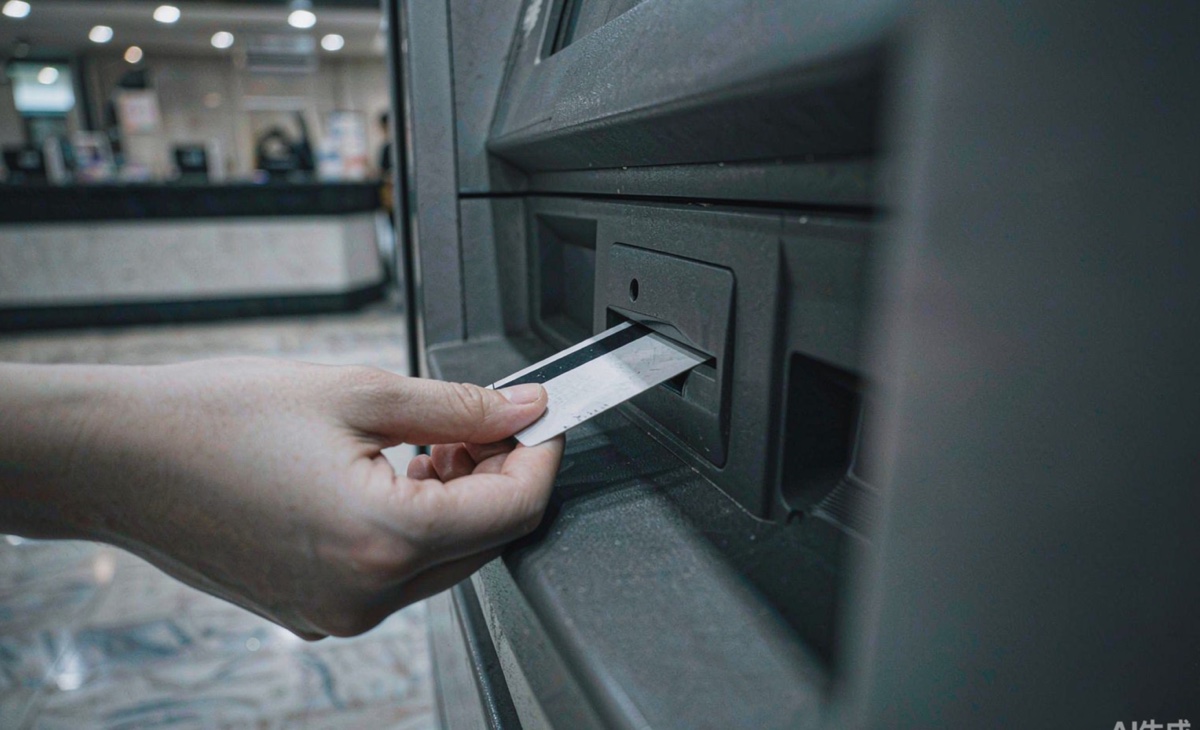
The ceiling is on the machine
start with the number that decides everything else, because it is the one nobody warns you about. bank of china states plainly on its english ATM page, updated in january 2026, that a foreign card can take RMB¥3,000 in a single transaction anywhere in the country. the same page then hands the daily and annual ceilings to your own bank, which is accurate and also useless in the moment, because your bank will happily authorise a withdrawal the machine refuses to dispense.
china construction bank is the opposite case, and the gap is wide enough to change your route across a city. its own page on foreign-card acceptance sets the limit at RMB¥1,000 per withdrawal, with a cap of two withdrawals a day. that is RMB¥2,000 a day from the largest ATM network in the country, at a bank whose machines are on nearly every corner. the same page rules out american express entirely, which means a traveller carrying only an Amex card has fewer doors than they think.
| Bank | Per withdrawal | Per day | Networks named on its own page |
|---|---|---|---|
| Bank of China | RMB¥3,000 | set by your issuing bank | UnionPay, Visa, Mastercard, JCB, American Express |
| China Construction Bank | RMB¥1,000 | two withdrawals, so RMB¥2,000 | Visa, Plus, Visa Electron, Mastercard, Cirrus, Maestro, JCB, Diners, Discover, Hong Kong and Macao UnionPay. Not American Express |
| ICBC | varies by machine | set by your issuing bank | Visa, Mastercard, UnionPay cards issued outside the mainland |
| Most city commercial banks | often RMB¥2,000 or less | set by your issuing bank | UnionPay only, in the majority of branches |
the practical read is a two-step plan rather than a single stop. take the large withdrawal at bank of china, where RMB¥3,000 arrives in one press, and treat every other machine as a top-up. if you are in a city where the nearest Bank of China is a taxi ride away, the RMB¥2,000 ceiling at a construction bank branch two blocks over is usually the better trade, because a second trip costs more than the difference in one press.
one more number belongs here, because it explains why machines are getting harder to find. the people's bank counted 1.01 million ATMs at the end of 2020 and 725,800 in the first quarter of 2026, a loss of more than 300,000 machines in five years as QR payment took over. shanghai alone still runs about 8,000, and as of march 2026 every one of them accepted foreign cards, with 2,153 able to dispense RMB¥100 and RMB¥10 notes rather than only hundreds. that last detail is worth knowing, because a machine that gives you three RMB¥1,000 notes is useless at a vegetable stall.
Which machine reads which network
the rule that works everywhere is the logo rule, and it is the only rule the national guidance gives. if the machine carries the mark of your card's network, it should read the card. if it carries only the UnionPay mark, it will not, and no amount of pressing will change that. the failures visitors report almost always come from a machine in a convenience store or a metro concourse, where the operator installed the cheapest terminal available and never paid for international acquiring.
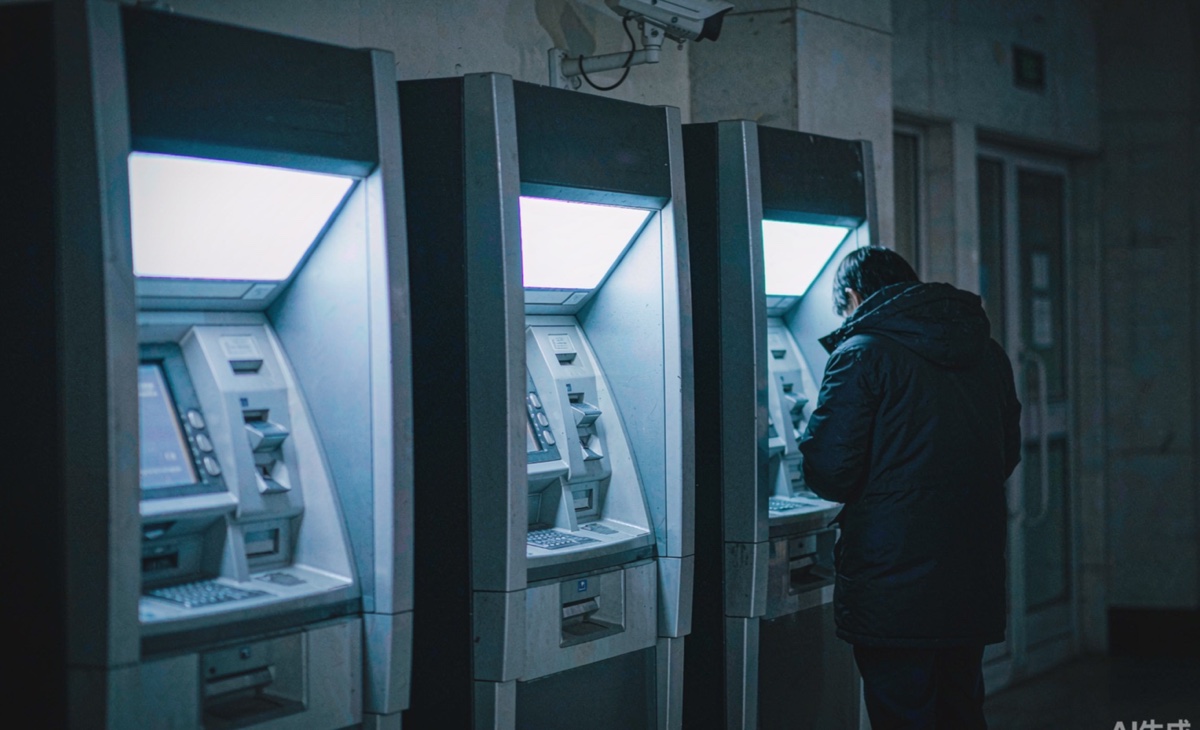
the reliable venues are the lobbies of the large state banks, the arrivals hall of an international airport, and the ground floor of a shopping centre with a bank branch inside it. the unreliable ones are standalone machines on a street corner, machines in a 24-hour convenience store, and anything inside a metro station, where the queue behind you will not wait for a second attempt.
there is a hardware problem underneath all of this that rarely makes it into English-language advice. china construction bank states on the same page that its machines take magnetic-stripe cards and do not yet take pure chip cards, and that a hybrid card has to be used through its stripe. a card issued in europe in the last few years may have no stripe at all. in that case the answer is not to argue with the machine, it is to walk to a different bank, because bank of china names all five major networks and has no such restriction on its own page.
the same page settles a question that produces a lot of confused posts: what to do when the screen asks for an account type. chinese machines route foreign cards through a menu built for american banking, offering checking, savings, credit and default. pick the one that matches the account behind the card, or pick default if you do not know, which is what the bank itself recommends. choosing savings with a checking card fails the transaction without explaining why, and the failure looks identical to a blocked card.
Four digits, then confirm
the pin question has a clean answer on the construction bank page, and it contradicts half the advice circulating in travel forums. its machines accept pins of four to six digits. if your pin is four or five digits, you type it and press confirm, and you do not pad it with zeros at either end. a pin longer than six digits, or one containing letters, will not be accepted at all, and in that case the card needs a pin change at home rather than a workaround in the lobby.
three wrong entries is the number that matters, because that is where most machines keep the card. the temptation after two failures is to try a variation, a padded version, a reversed order. resist it. two attempts, then a different bank, then a phone call to your issuer. the card that gets swallowed costs a branch visit and a passport, on a weekday, during banking hours.
Cash first, card last
the sequence at a chinese machine runs opposite to the sequence most visitors have in muscle memory, and this is the single most common way to lose a card in the country. in china the notes come out first and the card comes back last, after you end the session. unionpay says so directly in its own safety guidance, describing the overseas norm as returning the card before dispensing cash and noting that the domestic flow runs the other way.
what that means in practice is that the whirring sound is not the end of the transaction. take the notes, count them, then wait for the card, then press exit if the machine has not already done it. people who grab the cash and walk away leave the card in the slot, and the machine will usually retract it within half a minute. the receipt prints last, and it is worth keeping until the withdrawal appears on your statement, because it carries the reference number a dispute will need.
the account-type screen, the language screen and the amount screen all sit between the pin and the cash, so the whole interaction takes about ninety seconds. the machine will time out and reclaim the notes if you walk away mid-transaction, which is a second way to lose money without losing a card.
Who charges what
the fee structure is the part where english-language guides disagree most, and the disagreement usually comes from mixing up two directions of travel. a chinese card used abroad pays a chinese fee, and those schedules are published in detail by every bank. a foreign card used in china pays whatever its own issuer decides, and bank of china says exactly that on its ATM page: the fees for withdrawals and inquiries are determined by the overseas issuing bank.
read that sentence carefully, because it is doing quiet work. the bank that owns the machine is telling you it is not the one setting the price. in practice the major state banks do not add a counter fee on top for a foreign card, and the charges you see on your statement come from home: a fixed fee per withdrawal, a percentage for converting into yuan, or both. some travel accounts refund the fixed fee and charge nothing for the conversion, which turns a RMB¥3,000 withdrawal into a free one. most ordinary current accounts charge between one and three per cent plus a flat amount.
that structure produces a counterintuitive instruction. drawing a large amount once is cheaper than drawing a small amount four times, because the flat fee repeats with every press while the percentage does not. the machine limit of RMB¥3,000 is therefore also a fee limit, and the reason to prefer bank of china is not the exchange rate, it is that four presses at a construction bank cost four flat fees to collect the same RMB¥4,000 that two presses at bank of china would collect.
the exchange rate itself is set by your card network, not by the machine, which is why the ATM rate usually beats the counter at the airport and the hotel desk. the gap is not enormous on a single withdrawal and becomes visible across a trip. if you want the numbers next to everything else a day costs, the guide to daily costs in China puts them in one table.
The offer to refuse
some machines now offer to charge your withdrawal in your home currency, quoting a rate on the spot. this is dynamic currency conversion, and it is the most expensive question a Chinese ATM will ask you. the rate on offer is set by the machine operator rather than the card network, and it is worse by a margin that is invisible on the screen because there is nothing to compare it against.
the answer is always the local currency, which means yuan. the screen wording varies, and some versions phrase the choice as a benefit, offering certainty about the amount that will leave your account. decline it. the same trap exists at card terminals in shops, and the habit formed at the ATM carries over, so the choice you make in a bank lobby protects every purchase for the rest of the trip.
the tell is a pair of numbers, one in yuan and one in your own currency, with the second one already converted. if you see two amounts and a rate, you are being offered the conversion. if you see one amount in yuan, there is nothing to decline and you can carry on.
When the machine keeps the card
the card disappears into the slot, the screen returns to its idle message, and the queue behind you has already started to sigh. this is recoverable, and the recovery depends on which bank owns the machine rather than on anything you did.
| What you see | What it usually means | What to do |
|---|---|---|
| Card returned immediately, no message | the machine does not read your network, or your card is a pure chip card at a stripe-only bank | walk to Bank of China or ICBC, do not retry |
| Transaction declined after the PIN | wrong account type on the menu, or the withdrawal exceeds the machine limit | retry once with default account, then a smaller amount |
| Declined with no attempt counted | your issuer has overseas cash withdrawal switched off, or a fraud block is active | call the number on the back of the card, not the bank you are standing in |
| Card retained in the slot | three wrong PINs, or a hardware fault | Bank of China: branch staff or 95566. Construction Bank: the branch, with your passport |
the second row is worth expanding, because it is the failure that looks most like a fraud block and is not. many cards issued in the last two years ship with overseas cash withdrawal disabled by default, and the switch lives in the issuer's app rather than in a call centre. check it before you fly, since fixing it from a bank lobby in a city you do not know is a worse afternoon than fixing it at home.
if the card is retained, the bank's own instructions are the ones to follow. bank of china says to contact branch staff or call 95566. the general pattern at any bank is a branch visit during business hours with your passport, which is why the card you can least afford to lose is the one to leave in the hotel safe, and why a second card on a different network is the cheapest insurance on the trip.
How much cash to draw
the honest answer for a city visit is less than the machine will give you. qr payment reaches nearly every merchant, from a chain restaurant to a man selling roast sweet potatoes from a cart, and the foreign-card wallets described in the payment guide cover the rest. cash handles the residue, and the residue is small: a rural bus, a temple, a deposit, a market where the seller prefers notes.
a workable figure is RMB¥300 to RMB¥500 for a normal week, in mixed denominations, drawn once rather than four times. add more if you will pay a rental deposit, visit temples that take donations, or leave the big cities. a machine that dispenses RMB¥10 notes is worth seeking out for exactly this reason, since the alternative is a pocket of hundred-yuan notes nobody can break at eight in the morning.
the ceiling on what you may carry is set by customs rather than by the bank. under the General Administration of Customs announcement 2025 No. 43, anyone entering or leaving with more than RMB¥20,000 in notes, or foreign currency worth more than US$5,000, has to declare it and have it verified. that figure is the one to remember at the airport rather than at the machine, because the machine will happily give you more than you can legally walk out with.
there is one alternative worth naming for anyone staying longer than a holiday. the shanghai branch of the people's bank lists a digital yuan wallet among its payment options for foreign visitors, funded from a Visa or Mastercard and refundable to the same card. it is not a substitute for a bank account, and it is not a reason to skip the ATM, but it is a way to hold a small float without carrying notes. opening a local account, which changes the arithmetic entirely, is a separate process covered in the guide to opening a bank account.
Common questions
Can I withdraw cash from a Chinese ATM with a foreign card?
Yes, at any machine carrying the logo of your card's network, and the logo rule is the only one that holds nationally. Bank of China names UnionPay, Visa, Mastercard, JCB and American Express on its own ATM page, and describes round-the-clock access for cards issued outside China. Machines in convenience stores and metro stations frequently carry the UnionPay mark alone, and those will not read a foreign card no matter how many times you insert it.
How much can I take out at once?
RMB¥3,000 per withdrawal at Bank of China, which is the highest published figure among the large banks, and RMB¥1,000 at China Construction Bank with a limit of two withdrawals a day. Daily and annual ceilings belong to your issuing bank rather than the machine, so a machine may refuse an amount your bank would have authorised. Withdrawing once at a Bank of China machine is cheaper than four times elsewhere, because the flat fee repeats with every press.
Which bank should I use?
Bank of China first, for the RMB¥3,000 limit, the five networks and the absence of a chip-card restriction. ICBC second, on the strength of its coverage and its acceptance of foreign Visa and Mastercard. China Construction Bank is fine for a small top-up and poor for a large one. City commercial banks are a last resort, since most of their machines read UnionPay only.
Why does the machine ask me to choose an account type?
Because the menu was built for the American banking model, which splits checking, savings and credit into separate accounts. Pick the one that matches the account behind your card, or choose default if you are unsure, which is what the bank recommends. Choosing savings when the card draws on a checking account fails the withdrawal and produces the same error message as a blocked card.
Will my four-digit PIN work?
At China Construction Bank, yes, and without padding. Its published rule accepts four to six digit PINs, says to press confirm after four or five digits, and explicitly says not to add zeros. A PIN longer than six digits or one containing letters is refused outright. Three wrong entries is where machines retain the card, so stop at two attempts and try a different bank.
What if the ATM keeps my card?
Bank of China says to contact branch staff or call 95566, and the pattern at every bank is a branch visit during business hours with your passport. Do not leave the machine until you have the bank's number from the sticker on it, and do not assume the card will come back on its own. A second card on a different network is the cheapest protection against this, which is why it belongs in the hotel safe rather than in the same wallet.
Should I choose my home currency or yuan?
Yuan, every time. The home-currency option is dynamic currency conversion, priced by the machine operator rather than your card network, and it is worse by a margin the screen never shows you. If you see two amounts and a rate, you are being offered the conversion. The same offer appears at shop terminals, so refusing it at the ATM builds the habit that protects the rest of the trip.
How much cash do I actually need in China?
RMB¥300 to RMB¥500 for a normal week in mixed notes, drawn once. QR payment covers nearly every merchant, including street food, so cash handles the exceptions: rural transport, temple donations, rental deposits, and markets where the seller has never installed an app. Prefer a machine that dispenses RMB¥10 notes, since small notes are the ones that get used.
Do Chinese ATMs charge a fee?
Bank of China's own page assigns the withdrawal and inquiry fees to the overseas issuing bank, which is the bank that sets your price. The major state banks generally do not add a counter charge for a foreign card, and the amount on your statement comes from home as a flat fee, a conversion percentage, or both. Travel accounts that refund the flat fee make a RMB¥3,000 withdrawal free, which is why the card you bring matters more than the machine you choose.
Can I take the leftover cash out of the country?
Up to RMB¥20,000 in notes, and anything above that has to be declared under customs announcement 2025 No. 43, along with foreign currency worth more than US$5,000. Spending it down is easier than declaring it, and the departure tax refund counter, covered in the guide to tax refunds at departure, is one of the few places a large note is genuinely useful.